Physical Address
304 North Cardinal St.
Dorchester Center, MA 02124
Physical Address
304 North Cardinal St.
Dorchester Center, MA 02124
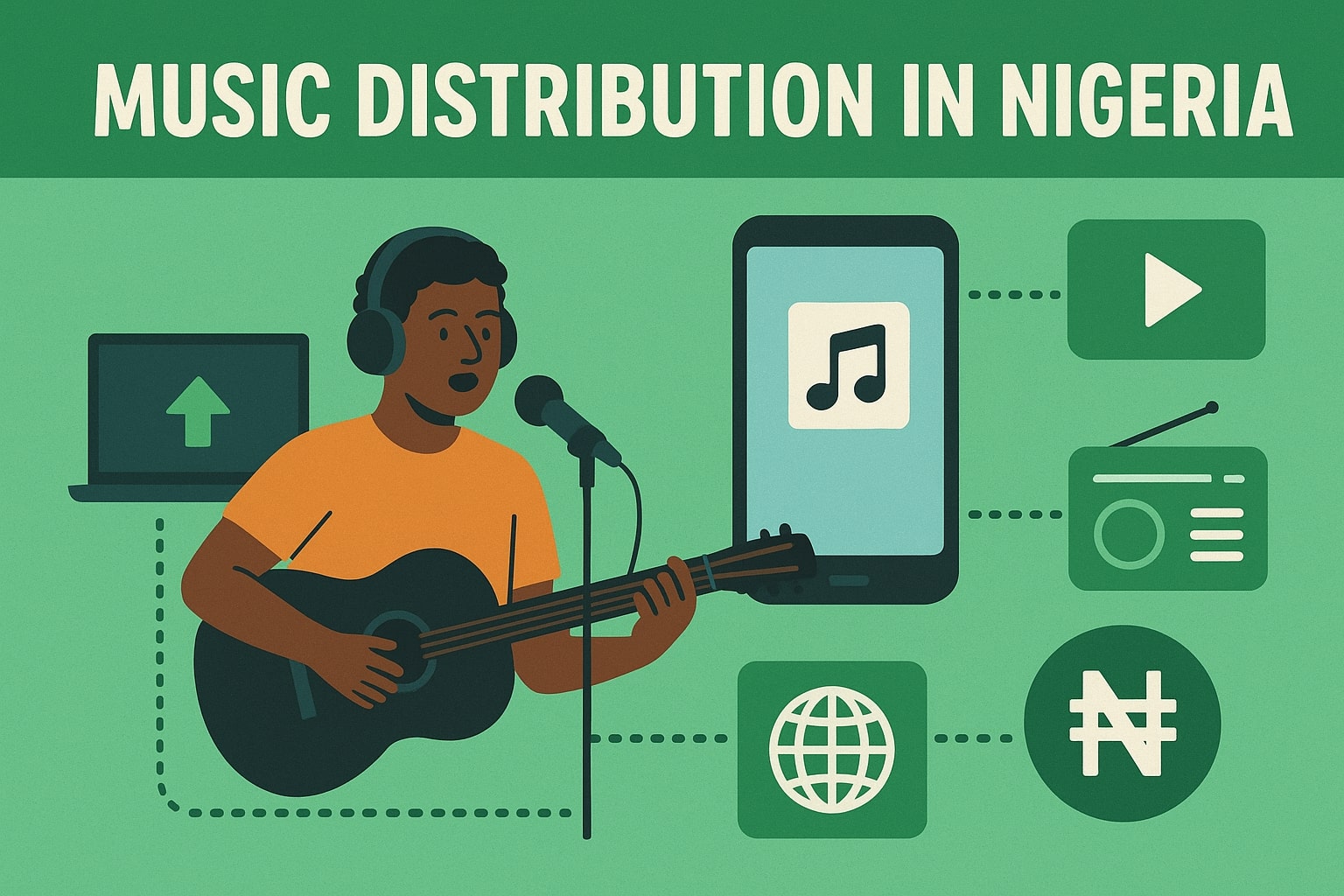
The Nigerian music industry has grown into a global powerhouse, and more artists than ever are looking for efficient ways to get their music heard. Music Distribution Platforms in Nigeria play a vital role in helping artists push their songs to streaming services, radio curators, and global audiences. These platforms make it possible for both upcoming and established artists to distribute their music professionally without needing a record label.
Digital music distribution is the process of delivering your songs to platforms like Spotify, Apple Music, Boomplay, Audiomack, and others. Unlike traditional distribution, digital channels allow for faster uploads, global accessibility, and comprehensive analytics.
When using Music Distribution Platforms in Nigeria, artists typically upload their audio files, metadata, and cover art. The platform then distributes the song across multiple digital streaming platforms (DSPs), manages royalty payments, and provides promotional tools.
Boomplay leads in Nigerian streaming due to affordable data usage, local partnerships, and a strong Afrobeats catalog.
Spotify brought global visibility and powerful playlisting opportunities, further expanding the Role of Streaming in Nigerian Music.
Apple Music appeals to higher-income users and has significant influence on chart rankings and global editorial playlists.
Music videos remain an essential part of Nigerian music promotion. YouTube dominates visual streaming and helps artists monetize worldwide.
The global shift to digital technology has transformed how music is created, distributed, and consumed, opening new doors while introducing fresh obstacles. Streaming platforms like Spotify, Apple Music, YouTube Music, and local giants such as Boomplay have reshaped music discovery in Nigeria. The economic impact is undeniable, with Statista estimating that the digital music market will generate US$122.10 million in 2024.
Still, alongside this rapid growth are significant barriers preventing the industry from reaching its full potential. This article explores the major Digital Music Industry Challenges in Nigeria and provides practical strategies for artists and stakeholders navigating the evolving landscape.
Digital platforms and social media have propelled Nigerian music onto the global stage more than ever before. Massive international hits—like Rema’s “Calm Down,” with over one billion Spotify streams—highlight the world’s appetite for Nigerian sound.
Digitalization has also empowered independent artists. Platforms such as TuneCore, DistroKid, and CD Baby give creators direct access to global audiences without needing a major label. The economic boost is evident, with increased investment pouring into the Nigerian music ecosystem, including Spotify’s 2023 launch of an Afrobeats hub after seeing streams rise from 2 billion in 2017 to 13.5 billion in 2022.
Record Labels in Nigeria Music Industry: Copyright & Revenue Facts for Creatives
The History of Nigerian Music: Genres, Pioneers, and the Global Sound of Afrobeats
Despite the cultural dominance of Nigerian music, several core issues continue to slow down the industry’s long-term expansion.
One of the biggest Digital Music Industry Challenges in Nigeria is inadequate infrastructure. High-speed internet, necessary for streaming, uploading, and distributing music, remains inconsistent and often expensive. Rural areas face even bigger gaps, creating a digital divide that limits fan access and decreases artist reach.
Inadequate digital payment systems also make it difficult for fans to subscribe to global services like Spotify or Apple Music. Restrictions on international transfers further complicate music purchases and royalty payouts.
Innovative solutions like the MTN–Apple Music partnership, which allows Nigerians to pay subscriptions using airtime, show the potential of local collaborations in bridging this gap.
Piracy remains a persistent challenge. Many Nigerians are unaware of copyright laws protecting creative work, and illegal uploading or downloading remains rampant on certain websites. Even digital platforms have unintentionally contributed, as unauthorized uploads still appear online.
The Copyright Act 2022 introduced sharper tools to combat infringement, including stricter criminal penalties and clear takedown procedures, yet enforcement remains inconsistent. Artists and labels must actively use these legal provisions to safeguard their work.
Stream farming—where bots artificially inflate stream counts, has become a major industry concern. It distorts data, misrepresents audience engagement, and damages credibility.
Monetization also remains complicated. Many artists struggle to understand royalty structures, payout percentages, and contract terms. A lack of transparency across some platforms creates uncertainty about actual earnings.
A healthier ecosystem requires:
CMOs play a crucial role in collecting royalties and protecting copyright owners. However, many Nigerian CMOs face operational inefficiencies, outdated technology, and poor accountability.
To improve effectiveness, stakeholders must:
As more music activities move online, cybersecurity becomes increasingly important. Data breaches, platform hacks, and unauthorized uploads continue to threaten revenue and intellectual property.
Mitigation strategies include:
For independent artists, understanding contracts is crucial for long-term success. Many lose earnings due to unclear agreements or restrictive clauses, especially when working with distributors that take significant royalty percentages.
Key contract terms artists should examine include:
Some contracts grant platforms exclusive rights across distribution, synchronization, and user-generated content. This can limit future negotiation power. Artists should aim to:
Advances and marketing budgets are typically recouped from the artist’s royalties. High recoupment rates can delay earnings for years. Artists should negotiate:
Some agreements require artists to surrender control of their YouTube or social media channels. This can weaken brand identity. Artists should retain administrative rights over their digital platforms whenever possible.
To unlock the full potential of the Nigerian music ecosystem, targeted solutions are needed to address the existing Digital Music Industry Challenges in Nigeria:
Invest in Digital Infrastructure
Expand high-speed internet access and upgrade digital payment systems to improve accessibility and royalty processing.
Combat Copyright Infringement
Strengthen enforcement, enhance stakeholder collaboration, and launch public awareness campaigns to reduce piracy.
Strengthen CMOs
Reform regulatory frameworks and improve technology adoption to ensure fair and transparent royalty distribution.
Adopt Advanced Technology Solutions
Implement DRM tools, AI-driven content identification, and anti-piracy systems to protect digital content.
Nigeria’s music industry stands at a powerful moment, globally influential yet limited by infrastructural and legal challenges. By addressing the core Digital Music Industry Challenges in Nigeria, from piracy to poor internet access, opaque royalties, and cybersecurity threats, the industry can reach its full potential.
With coordinated efforts from artists, government agencies, DSPs, and investors, Nigeria’s vibrant music sector can continue its upward trajectory while ensuring creators receive fair value for their work.
Navigating the Nigerian music industry requires more than talent, it demands knowledge, clarity, and the right partners. Understanding how record labels and digital music structures operate is the foundation for smarter career decisions. As the industry evolves, artists, managers, and investors must stay informed about funding models, ownership rights, and revenue streams.
At sanyawave, we empower emerging creatives to make confident, informed choices.
We encourage you to review every contract carefully, protect your ownership, and work only with partners who support your long-term vision.
Ready to take control of your music career?
Visit sanyawave today to access insights, and guidance designed to help you thrive in Nigeria’s fast-growing digital music landscape.
Statista estimates that Nigeria’s digital music market will generate US$122.10 million in 2024.
Limited high-speed internet access, costly data, and weak digital payment systems remain major barriers to growth.
Many users lack awareness of copyright laws, and illegal downloading/uploading still thrives on many websites.
Recoupment means the label recovers expenses (advances, marketing, etc.) before the artist earns profits—high rates can delay payments for years.
Stream farming uses bots to inflate streaming numbers, creating misleading analytics and making monetization less transparent.