Physical Address
304 North Cardinal St.
Dorchester Center, MA 02124
Physical Address
304 North Cardinal St.
Dorchester Center, MA 02124
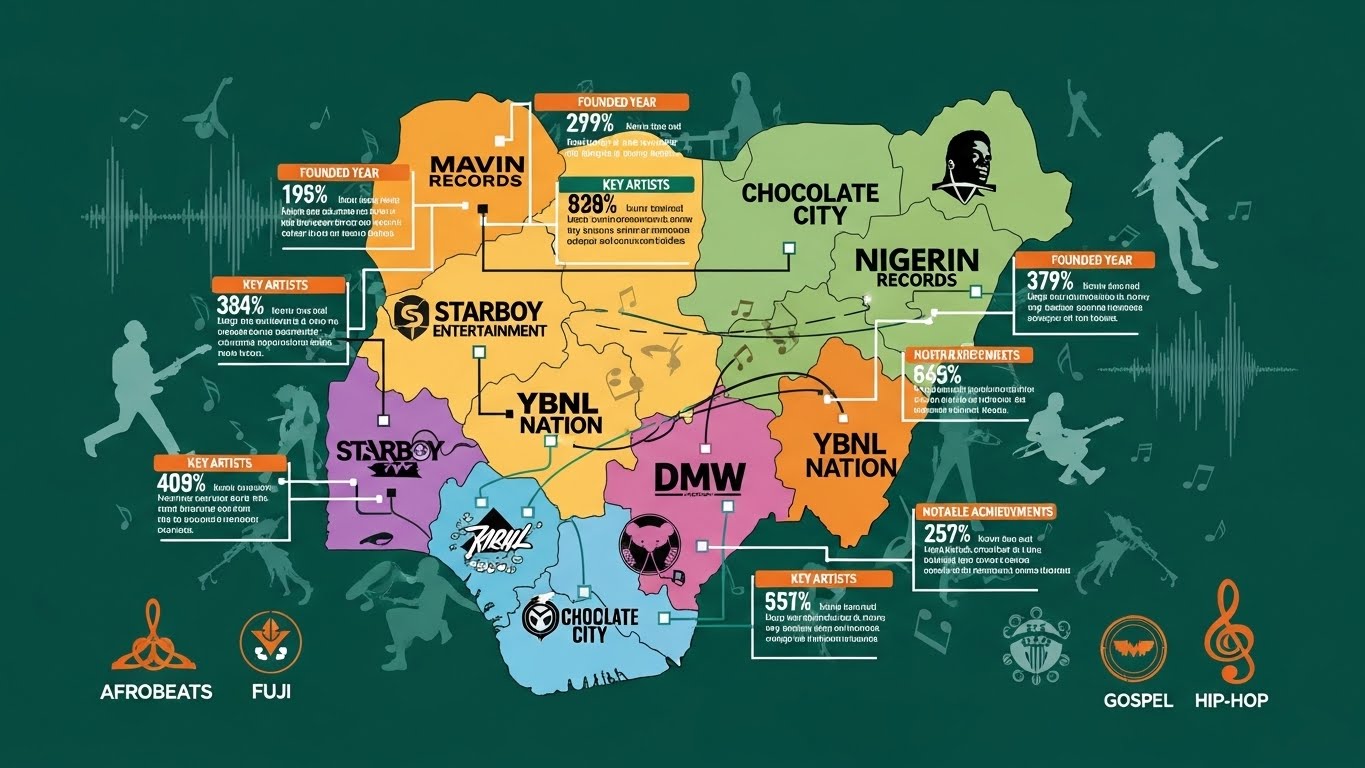
If you’re trying to understand Record Labels in the Nigerian music Industry and how they affect copyright, revenue, and artist freedom, here’s the short answer: the industry is booming, but the business models behind it determine who actually earns what. In this article, Sanyawave experts break down the global Afrobeats industry and explain how many artists still lose money because they misunderstand labels’ structure, ownership, and revenue. Since this problem affects both rising artists and established acts, learning how the system really works is essential.
Many creatives enter the system hoping for fame. However, they soon discover restrictive contracts, low royalty rates, and confusing distribution agreements. These issues leave many artists frustrated, underpaid, and locked out of their own catalogues. Because the industry keeps evolving quickly, relying on assumptions can ruin an artist’s long-term ownership.
This article explains everything clearly. It reveals how Nigerian record labels operate, how money truly moves, which companies control distribution, and how artists can protect their rights. Sanyawave highlights each core trend to help artists, managers, and investors make informed decisions.
Nigeria’s music sector is now a global heavyweight, valued at over $600 million (₦901.6 billion) annually. Even more impressively, revenues are projected to rise above ₦1.5 trillion by 2033, driven by Afrobeats’ worldwide acceptance and Nigeria’s young, digital-first population. Because streaming, global partnerships, and tech-driven platforms dominate growth, Record Labels in the Nigerian music Industry are evolving rapidly to stay competitive.
The distribution landscape in Nigeria is extremely competitive. Moreover, international partnerships now control most of the digital market. Data from the first three quarters of 2024 shows:
For the first time since TurnTable began tracking metrics in 2020, Virgin, EMPIRE, and Dapper each surpassed 1 billion on-demand streams within the first three quarters of 2024.
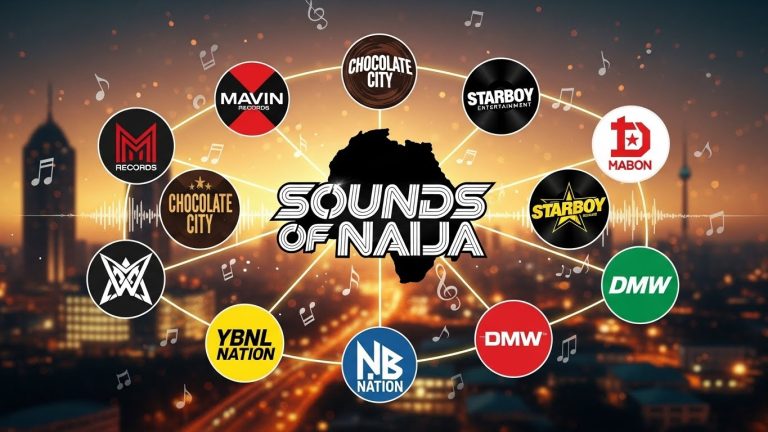
When studying Record Labels in the Nigerian music Industry, two dominant models emerge. We identify them as:
Founded by Don Jazzy in 2012, Mavin operates like a Silicon Valley-backed company.
Key Strengths
This structure helped launch global stars like Rema and Ayra Starr, although ownership becomes more complex because of external investors.
Founded by Olamide in 2012, YBNL emphasizes creative autonomy.
Core Features
Therefore, artists can grow without losing long-term catalogue control.
Although streaming dominates headlines, Nigeria’s record labels’ revenue structure tells a different story:
Concerts, Detty December events, festivals, and private bookings represent the biggest income source. Payments go directly to artists or management, reducing the revenue “leakage” common in streaming.
Spotify alone paid Nigerian artists ₦58 billion in 2024—double 2023 earnings. Even though numbers look impressive, streaming still cannot compete with live events financially.
Nigeria seriously under-monetizes this space because:
Surprisingly, artists often earn more publishing income from South Africa than from their home country.
Power imbalance remains one of the biggest challenges in the Record Labels in the Nigerian music Industry.
Common Causes of Conflict:
The famous Kizz Daniel vs. G-Worldwide case remains a textbook example.
The conversation around Record Labels in the Nigerian music Industry is incomplete without understanding the rise of independent artists and how digital tools reshaped the power balance. As streaming platforms, social media, and DIY distribution systems became more accessible, many Nigerian artists realized they no longer needed traditional labels to reach global audiences. Because of this shift, superstars like Wizkid and Olamide successfully walked away from restrictive label structures and built profitable careers on their own terms.
Before the digital revolution, artists depended heavily on record labels for funding, studio access, distribution, and marketing. However, these benefits often came with long-term contracts, low royalty percentages, and little control over masters. Consequently, many artists eventually found themselves famous but financially constrained.
Digital platforms changed everything.
Today, artists can upload music directly to Spotify, Apple Music, Audiomack, Boomplay, and YouTube without a major label. They can also promote their songs on TikTok, Instagram, and X (Twitter), reaching millions almost instantly. Because DIY distribution is cheaper, faster, and far more flexible, upcoming artists now prefer starting independently rather than entering binding contracts prematurely.
Furthermore, independence gives artists full ownership of their catalogues, creative direction, and revenue streams. Although they may still later partner with labels for global expansion, they often negotiate stronger deals—simply because they have already built an audience without giving up their rights.
Therefore, the rise of independent artists is reshaping Record Labels in the Nigerian music Industry. Labels now must innovate, offer fairer terms, and compete for talent that previously had no alternatives.
A major shift happening in the Record Labels in the Nigerian music Industry is the rise of innovative financing models that challenge traditional label systems. As artists increasingly demand ownership, transparency, and financial independence, new structures are emerging to help them grow without signing away their masters. One of the most influential pioneers in this space is Mr. Eazi, whose company emPawa Africa is redefining how African musicians access funding.
Traditional record label deals often require artists to relinquish catalogue ownership in exchange for advances and marketing support. However, this has led to long-term disputes, financial imbalance, and limited creative control. Because the industry is evolving quickly, structures that prioritize artist freedom are now gaining traction.
Mr. Eazi designed emPawa specifically to solve the financing gap that many African creatives face. Instead of forcing artists into restrictive contracts, emPawa offers a hybrid model that blends incubation, financial investment, and distribution support—without demanding ownership of the artist’s masters.
emPawa functions as a full creative ecosystem. It identifies promising artists, provides mentorship, funds music videos, and offers marketing and distribution guidance. As a result, upcoming musicians get the professional support of a label while retaining their independence.
One of emPawa’s most disruptive innovations is its use of streaming analytics to determine the size and structure of artist advances. Because decisions are backed by real performance data, artists receive fairer funding, and the company minimizes risk. This creates a sustainable investment cycle where both parties benefit.
In 2020, Mr. Eazi introduced the Africa Music Fund, targeting a $20 million capital pool dedicated to African artists. The fund enables artistes to access financing for production, promotion, touring, and distribution—all without surrendering ownership rights. By treating royalties as investable assets, the AMF brings a modern, venture-style approach to creative financing.
The structure of financing creatives represents a major turning point for Record Labels in the Nigerian music Industry. It gives artists access to capital while preserving:
Because artists no longer have to trade ownership for funding, they can scale their careers in a healthier, more sustainable way. Moreover, models like emPawa push traditional labels to evolve, adopt fairer terms, and compete with creator-friendly financing systems.
Ultimately, upcoming financial innovations signal a future where African artists gain more bargaining power, smarter contracts, and greater control over their creative legacy.
Understanding how Record Labels in the Nigerian music Industry operate is the first step to making smarter business decisions. Because the landscape is evolving quickly, artists, managers, and investors must stay informed about funding models, ownership rights, and revenue sources. Sanyawave encourages emerging creatives to study every contract carefully, prioritize ownership, and choose partners who align with their long-term goals.
It is worth over $600 million (₦901.6 billion) annually and may exceed ₦1.5 trillion by 2033.
Live performances remain the biggest earner, generating up to 74% of total income.
Weak CMOs, limited compliance, poor licensing systems, and fragmented enforcement reduce royalty collection.
Because contract terms, royalty splits, and ownership clauses often favor the label.
Virgin Music, EMPIRE, and Dapper Music & Entertainment.
Digital platforms offer cheaper promotion, global reach, and direct-to-fan distribution.